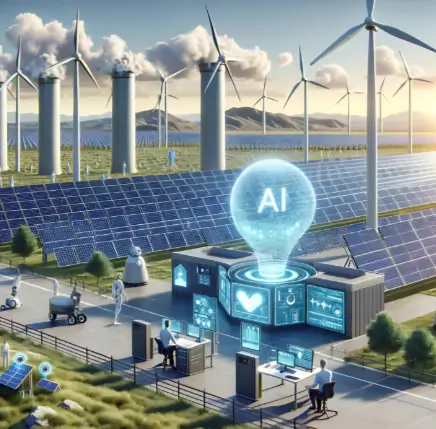
AI enables systematic evaluation of solar hardware, materials, and deployment conditions to identify reliable, cost-effective configurations. It forecasts weather and demand, optimizes panel orientation, and coordinates storage with dispatch to maximize yield and minimize cost of energy. Real-time management supports grid stability and reduces curtailment, while data-driven maintenance detects faults. The approach is transparent and adaptable, yet questions remain about integration, scalability, and resilience across diverse grids—areas that warrant further scrutiny.
What AI Can Do for Solar Energy Foundations
Artificial intelligence (AI) enhances solar energy foundations by systematically evaluating hardware performance, material properties, and deployment conditions to identify optimal configurations. The approach quantifies reliability, cost, and scalability, delivering actionable benchmarks. Data privacy safeguards are embedded in data pipelines, while hardware acceleration speeds simulations and validation. Decisions remain transparent, reproducible, and adaptable to evolving site conditions, enabling pragmatic, freedom-oriented, evidence-based engineering outcomes.
Forecasting and Optimization: Weather, Demand, and Panel Angles
Forecasting and optimization integrate weather data, demand profiles, and panel orientation to maximize solar yield and minimize levelized cost of energy. The approach quantifies Forecasting weather patterns and demand forecasting to calibrate panel angles, leveraging Optimizing angles to reduce irradiance gaps. Panel alignment metrics track accuracy, enabling iterative improvements, cost-aware performance evaluation, and transparent decisions for energy autonomy and grid-agnostic deployments.
See also: How Artificial Intelligence Helps Optimize Floor Plans
Real-Time Management: Storage, Dispatch, and Grid Stability
Real-time management extends the prior focus on forecast-informed optimization to operational control, integrating stored energy, dispatch scheduling, and grid stability metrics. The approach emphasizes storage optimization and grid dispatch efficiency, balancing supply and demand in real time, reducing curtailment, and signaling reserves. Quantitative metrics track ramp rates, state of charge, and frequency deviations, enabling precise, autonomous decision-making under variability.
Data-Driven Maintenance and Fault Detection in Solar Assets
Quantitative metrics—MTBF, detection latency, and false-positive rates—guide optimization, balancing operational risk with cost, while enabling scalable, autonomous fault handling across fleets.
Frequently Asked Questions
How Does AI Handle Rare, Extreme Weather Events Affecting Solar Plants?
AI mitigates rare weather via robust forecasting, adaptive control, and rapid reconfiguration, improving solar resilience; however, it must balance privacy concerns and model interpretability, addressing urban microgrids, technician reliance, and extreme weather with quantitative risk metrics.
Can AI Optimize Solar Adoption in Urban Microgrids With Limited Space?
AI could enhance solar adoption feasibility in compact grids by optimizing siting, storage, and load shifting; urban densification strategies inform capacity planning, while quantitative metrics project ROI, reliability, and grid resilience for constrained urban environments.
What Are Privacy Implications of AI Monitoring Solar Assets Remotely?
AI monitoring solar assets raises privacy concerns and data ownership questions; sensors reveal usage patterns and locations. Analytically, safeguards, consent, and clear ownership rights quantify risk, while transparency reduces vulnerability and supports freedom-driven, pragmatic deployment.
How Do AI Models Explain Decision-Making to Non-Technical Stakeholders?
The answer: AI models explainability challenges arise, requiring transparent metrics and visualizations to support stakeholder communication; models translate complex inferences into actionable insights, enabling non-technical audiences to assess trade-offs, risks, and expected performance with quantified clarity.
Will AI Reduce the Need for Human Maintenance Technicians?
AI may reduce demand for routine tasks, but not eliminate human involvement; AI maintenance and Technician automation can shift roles toward advanced troubleshooting, monitoring, and optimization, yielding measurable efficiency gains while preserving skilled technician work and safety oversight.
Conclusion
Artificial intelligence promises precision—until weather surprises us, then it dutifully repositions blame on data quality. In practice, forecasting, optimization, and real-time dispatch yield tangible gains: higher yield, lower costs, and measurable reliability improvements. Yet the system remains only as good as inputs and models, so performance is a constant, quantified negotiation between forecast accuracy and operational risk. The irony is that with improved data and metrics, solar economics become less mystical and more pragmatically controllable—until the next anomaly tests the math.
